

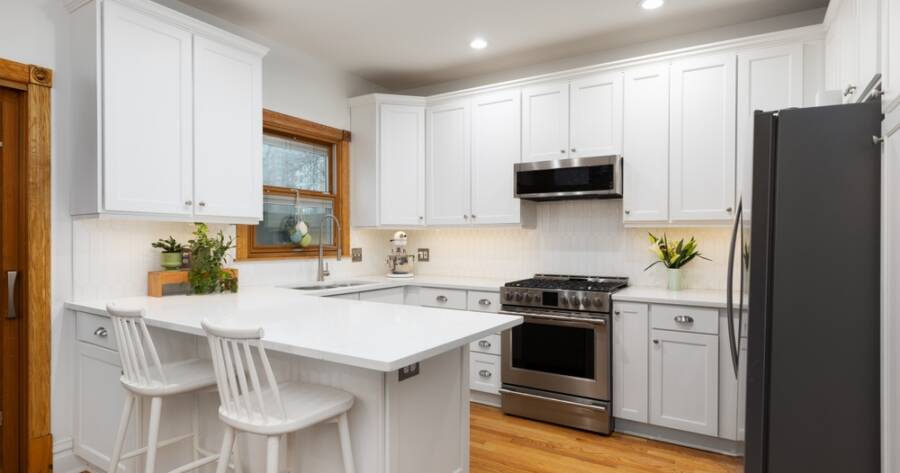
The classic kitchen island has long been a staple of American home design, but a new wave of space-conscious layouts is reshaping how homeowners think about their kitchens. Many alternatives are more practical than most people expect.
Why the Traditional Kitchen Island Is Losing Its Appeal
For decades, the kitchen island was considered the ultimate symbol of a well-appointed home. It promised extra counter space, hidden storage, and a casual gathering spot all in one structure. However, as homes in the United States trend toward more open-concept living and efficient use of square footage, the traditional island is starting to feel less like a feature and more like an obstacle.
Large, fixed islands can interrupt the natural movement of a kitchen, making it harder for multiple people to cook, clean, and socialize at the same time. In tighter floor plans especially, an oversized island can create bottlenecks that undermine the very benefits it was supposed to deliver. Contemporary kitchen design is responding to these realities with smarter, more adaptable solutions that prioritize flow and versatility over sheer size.
Peninsulas: The Attached Alternative That Earns Its Place
One of the most practical alternatives to a freestanding kitchen island is a peninsula. Because it remains connected to a wall or existing counter rather than occupying the center of the room independently, it can add useful preparation space without demanding as much open floor area. Peninsulas can provide work surfaces on three sides and are particularly well suited to narrower kitchens where a conventional island might interfere with movement. They can also incorporate storage or seating, allowing them to serve several of the same functions as an island (source).
A peninsula can also help organize an open-plan layout by creating a clear transition between the kitchen and nearby living or dining space. Its connected design generally requires less floor space than a freestanding island, which can leave more room for people to move through the kitchen while preserving additional counter space (source). For homeowners who want extra workspace without placing a large structure in the middle of the room, this combination of efficiency and functionality can make a peninsula a strong alternative.
Modular Workstations and Specialized Zones
Another direction gaining momentum in kitchen design involves replacing the monolithic island with purpose-built zones scattered strategically throughout the space. Rather than concentrating every added function into one central fixture, designers are carving out dedicated areas for specific tasks — a baking station with deep drawers and extra counter depth, a coffee and beverage center near the morning routine traffic, or a cleanup zone equipped with a secondary sink (source).
Modular workstations take this idea a step further by introducing freestanding units that can be repositioned as household needs evolve. These pieces can be reconfigured, relocated to support different functions, or even moved during a renovation without leaving the layout permanently altered (source). For families whose needs shift over time — whether that means accommodating children, aging relatives, or simply changing cooking habits — this flexibility represents a meaningful upgrade over permanently installed cabinetry.
Freestanding Tables, Breakfast Bars, and Banquette Seating
Not every kitchen alternative requires built-in construction. Freestanding dining or worktables are experiencing a resurgence as practical island substitutes, particularly because they introduce visual lightness to a kitchen that heavy cabinetry tends to suppress. A worktable that includes drawer storage can pull double duty as both a prep surface and social hub, offering the utility of an island without the permanence (source).
Breakfast bars are another compelling option, delivering extra worksurface and storage while acting as a subtle divider between the cooking and dining zones. Because they hug a wall or counter edge rather than projecting into the room, they avoid disrupting kitchen flow the way a large freestanding island can (source).
Banquette seating rounds out the list of flexible alternatives, especially in kitchens where maximizing square footage is a priority. Built-in bench seating along a wall or in a corner nook provides a surprising amount of storage beneath the seats while creating a warm, inviting atmosphere that an island rarely achieves on its own (source).
Sustainability and Smarter Investment
There is also an environmental angle to the shift away from large, fixed islands. Smaller, more targeted kitchen solutions consume fewer raw materials during manufacturing and installation, and their longer functional lifespan reduces the frequency of costly renovations. This alignment with sustainable design principles is increasingly influencing how American homeowners and designers approach kitchen planning, especially as material costs and environmental awareness continue to rise (source).
Whether the motivation is better traffic flow, smarter use of limited space, lower material consumption, or simply a desire for a kitchen that adapts to real-life demands, the trend away from the traditional island reflects a broader maturity in how Americans design the most-used room in their homes. The goal is no longer to fill space — it is to make every inch count.
Why You Should Learn More About Space-Saving Kitchen Trends Today
Kitchen design in the United States is evolving rapidly, and homeowners who stay ahead of these shifts are better positioned to make decisions that improve daily living and long-term home value. Alternatives to the traditional island — from peninsulas and modular workstations to breakfast bars and banquette seating — are proving that a well-designed kitchen does not depend on a single centerpiece.
Understanding these options helps homeowners choose layouts that genuinely reflect how they cook, gather, and live, rather than defaulting to a format that may no longer serve their needs. The right kitchen layout is the one that works for the people using it every day.