

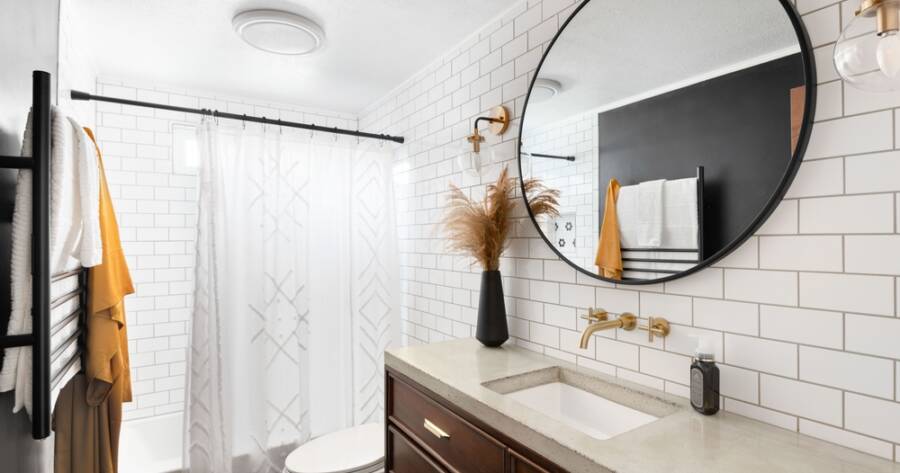
Making a bathroom look bigger and more luxurious does not always require expensive renovations. One surprisingly effective decorating trick involves raising the shower curtain rod and choosing a longer curtain. Such a simple adjustment changes how the eye perceives the room, creating an impression of greater height. With the right measurements, fabric, and hardware, homeowners can achieve impressive results.
Why Shower Curtain Height Makes Such a Difference
Shower curtains are often installed at a height chosen primarily for convenience. Although perfectly functional, a lower curtain rod can create a noticeable horizontal division across the bathroom. This interrupts the visual flow of the walls and may make a compact space appear smaller than it actually is.
Positioning the rod closer to the ceiling changes those proportions. The curtain forms a longer vertical surface, encouraging the eye to travel upward instead of stopping halfway along the wall. A similar principle applies to window treatments, where higher curtain placement can make windows and surrounding walls appear taller (source).
This technique is particularly useful in apartments, guest bathrooms, and smaller family bathrooms where expanding the physical space is impractical.
Creating a More Luxurious Bathroom Appearance
A ceiling-height shower curtain can make an ordinary bathing area resemble a thoughtfully designed interior feature. Instead of drawing attention to the curtain rod, the extended fabric creates a continuous visual surface that complements the walls and surrounding fixtures.
This approach works especially well when the bathtub sits inside an alcove. The longer curtain emphasizes the room’s vertical dimensions, while attractive fabric introduces softness into an area dominated by tile, porcelain, and other hard materials (source).
Color also influences the finished effect. White, cream, and other light shades can create a calm appearance, while subtle stripes or textured fabrics introduce visual interest. Matching the curtain to existing bathroom colors helps the design feel coordinated without requiring new paint or fixtures.
How to Raise Your Shower Curtain Rod
Before moving anything, measure the distance from the proposed rod position to the bathroom floor. Account for curtain rings, hooks, and the space needed below the fabric. The decorative curtain should hang close to the floor without dragging across it.
Next, evaluate the available mounting options. Homeowners seeking a permanent installation can use wall-mounted brackets or a ceiling-mounted track. Ceiling tracks create an especially streamlined appearance because the support hardware can be less noticeable (source).
Renters may prefer an adjustable tension rod that does not require drilling. However, the rod must be suitable for humid environments and capable of supporting the curtain’s weight. Whatever installation method is selected, make sure the mounting surface provides adequate support.
Choosing the Right Curtain Length and Fabric
Standard shower curtains may not reach far enough when the rod is positioned near the ceiling. Extra-long options, including 96-inch curtains and liners, are available for bathrooms requiring additional coverage (source).
For a polished appearance, choose enough fabric width to produce gentle folds when the curtain is closed. A tightly stretched panel can appear less decorative, while excessive fabric may become difficult to manage.
Material selection matters as well. Cotton blends and moisture-resistant performance fabrics can retain their appearance in humid conditions. Pure linen may stretch or lose its shape after repeated exposure to moisture, making construction and maintenance important considerations (source).
A separate waterproof liner is also essential when the decorative fabric is not designed to contain shower water.
Keeping the Shower Curtain Practical
Appearance should never compromise everyday functionality. The waterproof liner needs to hang inside the bathtub or shower base so water flows toward the drain rather than onto the bathroom floor.
When adjusting the rod, check that the curtain can move freely and does not interfere with ventilation, lighting, or bathroom fixtures. In bathrooms without windows or sufficient shower lighting, a curtain reaching nearly to the ceiling may reduce available light inside the bathing area.
After showering, allow the curtain and liner to dry properly. Keeping fabric away from standing water and washing it according to the manufacturer’s instructions can help prevent mildew and unpleasant odors.
Affordable Ways to Improve the Finished Look
A dramatic improvement does not necessarily require replacing every bathroom accessory. Homeowners may be able to reuse an existing rod by repositioning it and purchasing only a longer curtain.
Decorative hooks, coordinated curtain rings, and attractive fabric can also make the arrangement feel more intentional. For an additional improvement, consider keeping the curtain neatly gathered when the shower is not in use. This exposes more of the bathing area and may allow additional natural light into the room (source).
Those who already own a favorite curtain might consider extending its length with a coordinating fabric panel. This allows the existing design to remain part of the bathroom while adapting it to the higher installation.
A Small Change With a Noticeable Impact
Raising the shower curtain rod offers a practical way to refresh a bathroom without replacing tiles, cabinetry, or plumbing fixtures. By extending the curtain closer to the ceiling, homeowners can create a stronger impression of height while introducing a softer decorative element.
Careful measurements, suitable hardware, moisture-resistant materials, and proper liner placement make the difference between a temporary improvement and a lasting solution. With a little planning, this affordable adjustment can help even a modest bathroom look more spacious and thoughtfully designed.